Showing posts with label Nosadigital. Show all posts

Friday, July 23, 2010

Why there are no blog updates as promised

Last week, we promised to bring you our review of both the Que Pro and Aluratek eReaders. As you can see we have not done so. There are two good reasons for this but this should not be considered an excuse.

First, we are in the middle of revamping our site and as you can imagine, there are intense discussions as to which direction we should take. Some feel that we should stick to book reviews while others want us to continue in the direction we are at the moment. The discussions are so intense that we felt we should hold all blog updates for the moment. We are also in the middle of figuring out which products to keep and which to stop selling.

Second, many of you might have heard of Plastic Logic’s Que Pro eReader’s delayed launch. Some in our team have argued for not bothering with the review while others feel different. Again we have had intense discussions, which it must be said rage on.

The decision not to continue with these blog pieces was made so as to find a common ground in all discussions. We must say, however, that these blog pieces are not completely off the table. We will endeavour to keep you all posted. Thank you for your patience.

Monday, June 14, 2010

eBook Piracy "Surges" after iPad Launch


This blog was written by Ernesto on TorrenFreak. Here is the original address: http://torrentfreak.com/ebook-piracy-surges-after-ipad-launch-100409/ 

Here is the blog: 

With 500.000 iPads sold in the first week, Apple’s new multi-gadget is already a force to be reckoned with. As book publishers see the iPad as a potential threat to their revenues, we take a look to find out what happened to eBook piracy in the last week. The results are surprising.

The introduction of Apple’s iPod marked a significant change in the music industry’s business. When it was first released in 2001 there were no digital music stores online. By the end of that decade the number of digital music sales had outgrown physical sales by far. 

This year the book industry may see the definite breakthrough for eBooks, and again an Apple device is expected to play a facilitating role. Having watched the changes in the music industry where piracy is often portrayed as a huge threat, some book publishers already fear the worst.
The million dollar question is whether or not these fears are justified. How big of a threat is eBook piracy for the book industry? Is there a noticeable iPad effect? We have some interesting numbers to share.

To determine if Apple’s iPad has had en affect on eBook piracy we looked at the number of downloaded titles before and after its introduction. We decided to focus our research on the 10 best selling eBooks on Amazon which seemed to be a good starting point. The problem, however, is that none of these books are available on public BitTorrent, nor could we find them on file-hosting services or Usenet.

This in itself is quite an interesting observation, and clearly a signal that eBook piracy is not (yet) as widespread as that of music and movies. In order to come up with some comparison material we decided to change our sample to the 10 best selling paperback books in the business category, which should also fit well with the demographics of iPad buyers.

From this list 6 of the 10 books were available on BitTorrent. Although we have to note that BitTorrent may not be the only source of eBook piracy, it should give us a good indication of the iPad effect, if there is any. To do so, we tracked the download numbers from Saturday till Thursday, a week before the iPad launch and the days after. 

By comparing the data from these two samples we found that the number of unauthorized eBook downloads on BitTorrent grew by 78% on average, a significant increase. It is worth noting that all of the six eBooks had more downloads after the iPad launch than before.

David Allen’s productivity guide ‘Getting Things Done’ was by far the most downloaded eBook with an average of 435 downloads a day, up from 277 before the introduction of the iPad. However, this 57% increase is relatively small compared to some of the other titles we tracked.
‘Freakonomics’, another classic in the business section, saw a 104% increase in downloads, going from 187 to 381. ‘How We Decide’ saw an even bigger surge in downloads – 140% – as downloads went from 56 to 134. 

The three remaining books from the list that we tracked on BitTorrent are ‘The Tipping Point’, ‘How Women Decide’ and ‘The 7 Habits Of Highly Effective People’. These three titles all saw an increase in downloads, 21%, 47% and 71% respectively, with absolute download numbers after the iPad launch of 192, 52 and 82. 

Interesting data, but what can we conclude from the statistics?
First of all, there seems to be a significant iPad effect if we assume that the increase in downloads is in part related to the iPad introduction. On the other hand it is clear that the absolute download numbers are relatively small compared to those of music and films, where popular releases can have more than a million downloads in one week. 

This low piracy figure can in part be explained by the fact that the number of people with an iPad or other eBook reader is still relatively low. Another key factor is that most books are simply not available in a pirated version, so buying a book through an online store is far more convenient and faster than trying to find an unauthorized copy.

The convenience factor and the overall user experience are going to be the key advantages for the book industry. When the iPod was launched there were no digital download stores, making file-sharing networks the only option to get music easily.

As a final note we have to stress that piracy does not equal lost sales. In the academic publications that looked into the link between piracy and (music) sales, there is still no consensus on this topic. For now, the book industry is best off putting all their efforts into making a great product for consumers and we’re sure that the iPad can be of assistance there. 

In the months to come we will keep en eye on how eBook piracy evolves.


The Next Few Weeks

A whole plethora of eBook readers are now on the market. This might be confusing for a few people and to the tech savvy among you exciting. Many of you might remember the battle for standards through the seventies, eighties and even the nineties from video playing machines to software. I believe we are in such a time. Our previous blog - Amazon Vs Apple Be Damned: Publishers Pine for Universal eBook Format, has already mentioned this fact.

This is why I have decided that I will try to publish as many eBook reader blogs and reports on as many eBook readers as possible. I hope that these pieces will help you make up your mind on what to purchase. I also hope to cover topics such as eBook piracy in as much detail as possible.

I look forward to reading your comments and discussions on this blog. Thank you.

Tuesday, June 8, 2010

Amazon Vs Apple Be Damned: Publishers Pine for Universal eBook Format


NEW YORK (Reuters) — Giants and upstarts of publishing gathered at the annual BookExpo America here last week agreed e-books will transform the business but believe the big change will come when there is a standard format across which all e-books can be published and shared.

The industry has been going through a tumultuous period as Apple and Amazon duke it out for dominance in the nascent market for electronic books.Both want their devices — the iPad and the Kindle — to be the one consumers use to read e-books, and each wants to be the biggest virtual store were such content is sold.

For Michael Serbinis, chief executive of Kobo, a company that allows users to buy e-books and read them on most devices, that battle is a distraction to the real changes coming.
“Today you can buy a book at Barnes and Noble and you can buy a book at Walmart and you don’t have to keep them in separate rooms in your house,” he said. “You buy a book from Apple and Amazon and you have got to keep it tied up with your Apple universe or your Kindle universe.”
Ultimately, consumers want freedom, said David Shanks, chief executive of leading publisher Penguin Group USA.

“Our fondest wish is that all the devices become agnostic so that there isn’t proprietary formats and you can read wherever you want to read,” Shanks told Reuters. “First we have to get a standard that everybody embraces.” The issue, he said, is the fear of piracy and how to set a common digital rights management system to thwart it.

The battle over technology formats is a familiar one. A century ago, Edison and Victor made records that could not be played on each other’s players. There was the Betamax/VHS videotape struggle and more recently Blu-ray beat out HD DVD.

BookExpo showed traditional books are alive and well. There was buzz for the upcoming book from news parody king Jon Stewart and raucous Rolling Stones guitarist Keith Richard’s memoirs as well as a book on home design by Barbra Streisand. And there was evidence of change coming in the age of e-books, although the new format was displayed only in one small corner of the sprawling Javits Center convention halls.

Among the digital companies here were Sideways, which helps authors and publishers transform text into multimedia content, adding video, pictures and features such as Twitter feeds.
Another company, Ripple, allows adults to buy children’s e-books and record their voices reading them. And there were gadgets such as the enTourage eDGe — a twin-screened device which opens like a book to reveal an eReader on one side and a NetBook on the other.

Eileen Gittins of Blurb, which helps authors and companies self-publish, predicts e-books will make up half of all sales in five years. In 2009, the global publishing business, including print and digital, was worth $71 billion, according to PriceWaterhouseCoopers.
“We’re seeing now in book publishing what had happened previously in the music publishing industry. And that is, a massive disruption of the business model,” she told Reuters.
The problem is that the cost of printing is a minor cost of publishing whereas developing work with an author and marketing it consume the lion’s share of costs.
That means, she said, that the book industry will become more like the movie business. “The book publishing industry is becoming more blockbuster focused,” she said.

Susan Petersen Kennedy, president of Penguin Group USA, said publishers will not make the same mistakes as the music industry, which had an epic struggle over electronic distribution and piracy and lost huge market share. “It’s always treated as if the publishers are the Luddites,” she told Reuters in an interview. “The devices have not caught up with the content. Contrary to popular opinion, the book is actually so far more flexible.”

Serbinis says the industry will see dramatic change. He predicted consolidation among publishers and said tablet computers will be common. He expects readers to eventually be able to lend e-books to each other.

And books won’t just be for bookstores any more as new distribution channels from mobile phone companies to gaming companies join the party, he said. “It won’t only be the bookstores that have gone digital,” he said.

You can read the original article here: http://www.wired.com/epicenter/2010/05/universal-e-books-format/all/1
Photo: Men dress as the iPad and Kindle in effort to promote their company that recycles old electronics during the April 3, 2010, release of the iPad at the Apple store on Fifth Avenue.
Bryan Derballa/Wired.com


Saturday, May 29, 2010

The audio book and when it can be useful

I was never really a fan of the audio book until I had the opportunity to listen to one. I was with a friend in Canada, and we were driving from Regina to Calgary. The journey between the two cities is seven hours. Now throw in the fact that it was winter and was snowing. Canada has a reputation for its snow. I leave the rest to your imagination. Listening to "The Luckiest Guy in the World" was nothing short of wonderful. Apart from the wintry conditions, the book was a breathe of fresh air. I thoroughly enjoyed the narration. It also made me appreciate the audio book in the sense that some books look like a right handful to read. 

However, there is one thing we must not forget, bad narration really does ruin a perfectly good book. Let me give an example (here comes the controversy), Seth Godin is a great public speaker and very interesting to watch in action. For those of you who don't know Seth Godin, he is one of the co-founders of Squidoo, and bestselling author of books such as "Unleashing the Idea Virus" and "All Marketers are Liars". I must complain though that when Seth narrates in one of his books, well, it is not enjoyable. His voice was monotone and frankly boring. Many of you might disagree but why not head on down to Audible.com to download his free audio book "Tribes" and see (hear is what I should say) what I mean. I can also think of some other books such as Adam Khoo's Secrets of Self-Made Millionaires and narrated by Adam could have been better. I am sure Adam would not agree with me just as some of you but hey, you be the judge. Oh, and by the way, Secrets of Self-Made Millionaires is a very interesting book. 

Criticism or not, good audio books are still really good value and should be enjoyed. I can only imagine how most of you enjoy your audio books. Maybe you are one of those people who lights up a cigar and listens to one of Arthur Conan Doyle's books or you put the kettle on for a cup of tea while listening to Oscar Wilde, you can not argue that audio books are useful and here to stay.

Sunday, May 16, 2010

It's a Steal

This piece was from John Lanchester of the Guardian Newspaper. The original piece can be found here: http://www.guardian.co.uk/books/2007/apr/07/featuresreviews.guardianreview2


Here is the piece:


Many of us take it for granted that we can download films or music without paying. Now, new projects such as Google Book Search will make millions of books available too. What will this mean for authors and the publishing industry? John Lanchester asks who owns what in the digital age.


The words "intellectual property" have a fairly predictable effect. Use them in conversation, and nine out of 10 people immediately fall into a deep sleep, only to wake eight hours later demanding coffee and Weetabix. The 10th person, who is likely to have some engagement with the creative industries, will immediately launch into a long, articulate, autobiographical complaint.

The broad story of copyright is one of creative individuals feeling they are being stiffed, and that the public interest is losing out as a result. Everyone has a beef about it. This is mine. Between Christmas 1941 and the dropping of the atomic bombs in August 1945, my grandparents were in a Japanese internment camp in Stanley, at the far edge of Hong Kong island. Many internees died of malnutrition and illness, only three Red Cross parcels arrived during the entire war, and some of their closest friends were tortured and executed by the Kempetai, the Japanese military police and equivalent of the Gestapo.

Personal possessions were scarce. By the end of the war, my grandmother owned only two things: a one cent coin with the middle drilled out, which she wore as a wedding ring, since she had traded her ring away for food in early 1945; and a small pocket diary for 1942, which she must have bought before the fall of Hong Kong. She used that diary for the next three years, writing in pencil, and commenting almost exclusively on food - basically, every time they had something other than rice, she made a note of it.

At the end of the war, the internees were given a typed newsletter that filled them in on what had happened while they were in the camp. (Almost the first thing on it was a remark about the influence of women in all areas of civilian life during the war: "driving buses and working in factories".) At about the time she was given that newsletter, Lannie, my grandmother, must have found a typewriter, because along with the other scraps of paper from this period I found a poem that she, or someone else, had typed out. It was called "A Farewell to Stanley":

A farewell to Stanley - it's over
Of internees there's not a sign
They've left for Newhaven and Dover
For Hull and Newcastle on Tyne.

The poem must have meant a lot to Lannie, or she wouldn't have kept it for the rest of her life; it is, it seems to me, a rather good poem. But you won't find it in the American edition of my book Family Romance, because my American publisher was reluctant to let me quote it. The fact that I couldn't find anything about the poem's author made them too nervous. If I couldn't find him or her - didn't even know whether he or she existed and wasn't a pseudonym - then the poem was probably in copyright and as such couldn't be published.

There might have been a way around it, if I was prepared to indemnify the publisher from potential costs arising. That didn't seem fair to me. "I don't feel I can indemnify you for the legal risk, for obvious reasons to do with the relative balance of resources between us," I wrote to the corporate lawyer. "Pearson is a £6bn global corporation, I'm a writer with two small children and a mortgage ... One of the complaints of the people in the camp was that they were forgotten and silenced. It does seem sad that this person's voice won't be heard precisely because no one knows who he or she was."

No dice. The poem isn't included in the US edition of my book. It was cheeky of me even to ask, since, as my American editor told me, "copyright over here is like libel over there" - in other words, it is immune from common sense, with no room for flexibility or negotiation or the self-evidently right thing. It is almost impossible to exaggerate the ferocity of the copyright laws in America, which are in effect written by the large entertainment conglomerates. The most famous example of this is the Mickey Mouse effect, whereby every time the Mouse is about to come out of copyright, the term of copyright is extended. This has happened 11 times in the past 40 years. If the same laws had applied retrospectively, the US government would never have been allowed to use the name or the image of Uncle Sam.

The corporations have the power, and they are not afraid to use it. The Digital Millennium Copyright Act in the US considerably extended the range of both criminal and civil offences that could be committed over copyright issues. There is a clause in US film contracts which awards the producers rights "in perpetuity and throughout the universe and for any and all forms of expression whether now existing or hereafter devised". As far as I can tell, the only loophole in that is if you fell through a crack in the space-time fabric of the universe into a parallel one. (In case you're wondering how that bizarre clause came about, it was as a result of a lawsuit between Disney and the singer Peggy Lee over the video-cassette edition of Lady and the Tramp. Her contract was drawn up before the existence of VCRs and she sued on the basis that Disney did not automatically have the right to sell videos without her permission. She won $3.8m, and the "throughout the universe" clause was born, to make sure the studios never went through anything like that again.)

There is an irony here. Twenty years ago, the US studios announced that the end of civilisation as we know it was at hand; the destructive force was the video-cassette recorder. Jack Valenti, president of the Motion Picture Association of America, went before Congress and said that "The growing and dangerous intrusion of this new technology is to the American film producer and the American public as the Boston Strangler is to the woman alone." Today, revenue from video rentals accounts for 46.6% of all the money earned by the major studios. Without the technology they fought to the last ditch, the studios would have gone out of business.

The entertainment industry feared new technology, and didn't understand it. And then came the internet and file-sharing. First they adopted the ostrich position, then they counter-attacked by issuing semi-broken "copy-protected" CDs, and by suing alleged file-sharers, and in general did everything they could to try to make their customers hate them. Thanks to these draconian legal tactics - which have involved mishaps such as suing dead people, children and grannies who don't own computers - the industry is slowly managing to convince people that file-sharing is illegal. But that is not the same thing as persuading them it is wrong.

Wednesday, May 12, 2010

Monday, May 10, 2010

One reason why the iPad could be the eBook Reader Killer

I recently received a present from older brother - a MacBook Pro. I received it about a week and a half before my birthday. This present really made my century not my day. It took me a little while to get used to the MacBook considering I have used a Windows based PC since I started anything computing. As I got used to using the MacBook, I noticed one key thing - the ease on the eyes while reading.

Seriously? Yes, seriously. Although I cannot speak for everyone, I am sure there are many who can say the same thing. Some of you might think I am plugging Apple products, but I assure this is not the case. When something is of good quality, let us not be hypocritical about it. Anyone who has tried to read eBooks on a laptop will know that after reading about two or three pages, the eyes begin to feel the strain. In addition, if you are wearing glasses, heaven help you.

However, reading on the MacBook has nothing short of fantastic. It has been easy and I have finished reading four eBooks within a two-week span. I will tell you that I have never done that on my laptop. I have a wonderful HP laptop and I would not trade it for the World.


This now brings me to the real topic - the iPad. I read a headline recently that the iPad is the eBook reader killer. Going by my experience with my new MacBook Pro, I could say yes even if it is just for the ease of reading. I have not yet had a chance to use the iPad - and I will get a chance very soon - but if the reviews are anything to go by, then Apple is in for some serious profits. For those of you who got to see CNBC’s Charlie Rose Show will have heard the comments made by the journalists who got to use the iPad for a few weeks. We all know they were very impressed.

As I mentioned earlier, I have not yet got the chance to use the iPad but if it is great to read with as the MacBook is, then I might just trade in both my Aluratek and Sony eReaders for one. What do you think?


Saturday, May 1, 2010

New page additions - Coupons and Video On Demand

This is to let everyone know that two new pages have been added to our site. The first of our pages is Coupons. This page shows all the special deals you can get from us. Many have a limited time to claim, so please hurry. The second of our pages is Video on Demand. This page allows you to watch an entire library of movies and TV programmes online. You will have access to movies such as Avatar, and Crazy Heart. You will also have access to TV programmes such as Blood Brothers and Heretic Fork to mention but a few. 
So what are you waiting for? Get viewing and have a great time.

Tuesday, April 27, 2010

Sunday, April 25, 2010

Buy one get one free and up to 90% on discounted books

I would like to say thank you for your support over the last few weeks. To show our appreciation, please find the following links leading you to some goodies:


Please watch out for more of the same or go to our site and register to have information about our promotions sent to you. I hope you enjoy what we have to offer. Cheers!

Wednesday, April 21, 2010

Can a new publisher flourish?


Here is a blog piece I came upon yesterday evening. This blog piece comes from the Guardian Newspaper on the 14th of July 2009. The piece written by Sam Jordison is titled "Can a new publisher flourish?" With most publishers battling one another on price and new digital formats, can a new publisher thrive in this jungle? We must also not forget the issue of digital rights management (DRM) when it comes to eBooks. Publishers not ready for these issues will not last long in the market place. Not to mention an unwillingness by customers to pay the same price for an eBook as a print book.

Anyway, here is the piece as promised and by the way, comments anyone?

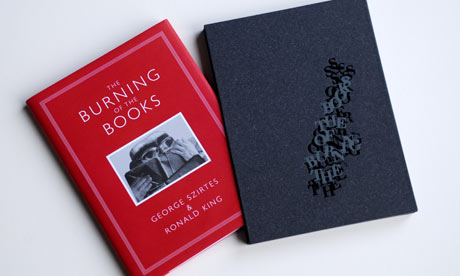
Last weekend, I drove down the Suffolk coast to Aldeburgh to witness the launch of an increasingly rare phenomenon: the first book of a new publishing house. This new venture is Full Circle Editions, set up by Bloomsbury co-founder and Harry Potter discoverer-in-chief Liz Calder, together with TV producers John and Genevieve Christie and a former editor of the Bookseller, Louis Baum.


The book – called The Burning Of The Books – is also a collaborative effort; between the poet George Szirtes and the artist Ronald King. It's printed on creamy tactile paper, complete with luxurious fold-outs. Genevieve Christie sells it as "wonderful writing in a lovely form" and the prints spread out about the room certainly looked good. The Guernica-influenced pictures, etched in white and black (heavy on the black) have a dark kind of beauty. I wasn't really in a position to judge the poem – a busy room full of noisy, bread-stick munching paragons of the chattering class is no place to form an opinion about such an involved work – but it did have a certain sombre weight and words that would – at the least – be worth more detailed study.

But I was there out of curiosity about the new publishing house as much as the physical product. There's an inherent interest in all these big names getting together – especially now, when publishing is so mired in difficulties: when small presses such as the much-loved Dedalus are lurching from crisis to crisis, bigger houses are announcing job losses every other week and cynical marketers are attempting to stifle the variety and independence of publishing outlets yet further by locking us into dependence on purchasing hubs such as the Kindle – a device with fire-based säuberung embedded in its name and repression in its DRM-infected software.

Setting up a new publishing house in the teeth of recession seems therefore almost like an act of rebellion – especially when the house in question is dedicated to the promotion of the value of books as objects, and whose first release is – significantly – a reworking of Elias Canetti's book-destruction nightmare, Auto Da Fé.

Certainly Liz Calder sounded defiant when I was introduced to her. Full Circle Editions, she said, is emphatically not "profit oriented, market driven or celebrity ridden." Meanwhile, she and her fellow directors want to "produce beautiful books without marketing people telling you that you can't do it." It sounded to me like she was releasing some of the vexations built up at the head of what became one of the biggest commercial publishing operations on planet earth, and she agreed that she was realising a "frustrated ambition".

If you were to look at it cynically, you could describe this publishing operation as something of an indulgence. You might also get that impression from the party's location in sleepy, prosperous, comfortable Aldeburgh: Bloomsbury-on-sea, but without the museums. And it would be all too easy to form a prejudice about the appearance of the crowd gathered for the launch: a dignified selection of prosperous white-haired men with shirts tucked into neatly pressed trousers, and elegant women in the not-too-flowery flowing dresses favoured by the ageing intelligentsia. Finally, the limited print run and marketing of the books has a taint of hobbyism about it too. But I'd prefer not to be cynical for once. Who, after all, would forbid someone like Liz Calder an indulgence – especially if the net result is an attractive, intellectually provocative book that maintains a sharp edge and dark heart in spite of its cosy origins?

So I found myself warming to the event, even if it did give me a sudden, bleak vision of the possible future of book publishing: one rather like the past we're supposed to have escaped, in which worthwhile paper books are the exclusive play-thing of a well-to-do elite, and, in the place of the church, DRM-wielding gate-keepers control access for the rest of us.

Then again, if the cartoonist Glen Baxter (one of several of Liz Calder's successful protégés who put in an appearance) is to be believed, this launch wasn't entirely unlike the beginning of Bloomsbury – which also began in elitist fashion in the middle of a recession. And we all know how that ended. Perhaps there is some cause for hope here. The irresistible pun will come true and things will come full circle. "This is Liz Calder, " Glen Baxter said. "And she'll just keep going and going. She won't stop … "

Thursday, April 15, 2010

Audio Page Update

People,

You may remember that our previous audio page had just a selection of non-fiction books as well as a link to a selection of fiction books. We want to inform you that you can now view all your MP3 books in all their categories. You also have access to the sub-categories. We would like to offer our apologies for any inconvenience. Thank you, and get reading, get creating, and get cracking.

Wednesday, April 14, 2010

Yes, It is Official - We Are Open For Business

This is to let all know that we are now officially open for business. Nosadigital sells fiction and non-fiction for both book formats. Nosadigital also deals in eBook readers as well as MP3 players, and iPods.


At Nosadigital, we give you all you need to either create or enjoy your e and audio books. Electronic books are becoming increasingly popular. Why not try one and see if you will not love them. Audio books go one-step further. Are you one of those people who would rather have someone read you the book than actually read it? If so then audio books are for you. Whether you are in your car or the bathroom it really does not matter. You can enjoy it all the same. 


Nevertheless, let us suppose you are one of the creative types. Moreover, you would rather create a book than read one. Nosadigital is the place for you as we have everything you need to create that book. From digital recording equipment to the software required, we have it all. Over time, we will even advise you through our blog on ways to accomplish all the necessary tasks of achieving your objectives. Besides, if you do not like any particular product, you can always return it. So there, what are you waiting for? Get reading, get creating, and get cracking.